

Sleep is an essential part of physical and mental well-being at every stage of life. As people grow older, however, sleep patterns often change. An older adult may begin going to bed earlier, waking earlier, sleeping more lightly, or waking several times during the night.
Some changes may simply be part of an evolving routine. Others may occur alongside changes in mood, energy, concentration, motivation, or daily engagement.
The challenge is that these changes are not always obvious when viewed individually.
A single restless night tells us very little. But when changes in sleep occur repeatedly and appear alongside other changes in everyday well-being, they may become part of a broader pattern worth paying attention to.
This is why sleep can be an important part of understanding mental wellness in older adults.
Why Sleep Patterns Can Change With Age
Sleep does not remain exactly the same throughout life.
As people age, their sleep schedules and habits may gradually change. Some older adults may find themselves becoming tired earlier in the evening and waking earlier in the morning. Others may experience more interruptions during the night or feel that their sleep is lighter than it used to be.
Daily routines can also influence sleep.
Changes in physical activity, medications, health conditions, social routines, stress, caregiving arrangements, or living environments may all affect when and how someone sleeps.
This means there is no single sleep pattern that applies to every older adult.
Instead of focusing on whether a person’s routine matches a universal standard, it can be more useful to pay attention to changes from that individual’s usual pattern.
If someone who normally sleeps well begins regularly reporting poor sleep, for example, that change may provide useful context when considered alongside other aspects of their well-being.
Sleep and Mental Wellness Are Closely Connected
Most people have experienced the effects of a poor night’s sleep.
The following day may feel different. Concentration can be more difficult. Energy may be lower. Small frustrations may feel larger. Motivation can decrease.
When sleep difficulties continue, these effects may become more noticeable in everyday life.
Changes in sleep can occur alongside changes in:
- Mood
- Energy
- Concentration
- Motivation
- Stress levels
- Social engagement
- Daily activities
- Overall sense of well-being
This does not mean that poor sleep automatically indicates a mental health condition.
Sleep can be influenced by many factors, and changes should always be considered within a person’s broader circumstances.
The important idea is that sleep is one piece of a larger wellness picture.
One Bad Night Is Different From a Pattern
Imagine an older adult sleeps poorly on Monday night.
On Tuesday morning, they feel tired and less interested in their normal activities.
By Wednesday, they are sleeping normally again and their energy has returned.
That short-term change may simply have been temporary.
Now imagine a different situation.
Over several weeks, the same person repeatedly reports disrupted sleep. At the same time, their energy gradually decreases, they participate less frequently in activities, and they describe their mood differently than usual.
Each observation alone may seem small.
Together, however, they create more context.
This is why consistent wellness monitoring can be more informative than relying entirely on isolated observations.
The purpose is not to interpret every fluctuation as a warning sign. It is to make longer-term changes easier to recognize.
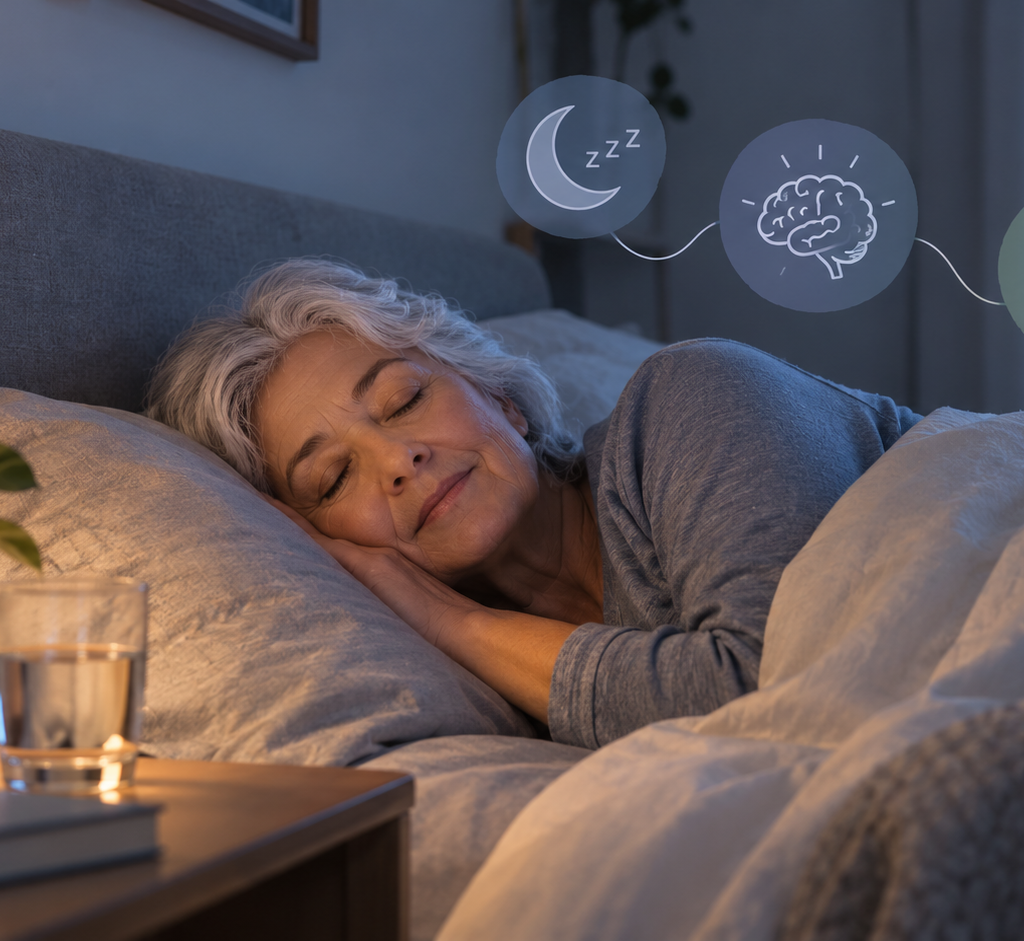
Why Sleep Changes May Be Missed
Families and caregivers may not always know how an older adult has been sleeping.
A family member might visit once or twice a week. A home care professional may spend only part of the day with the individual. Even when someone asks, “Did you sleep well?” the answer may reflect only the previous night.
Human memory also has limitations.
It can be surprisingly difficult to remember exactly how we felt two or three weeks ago.
Was sleep worse last week?
Was energy lower?
Has mood actually changed, or does it only feel that way today?
Without some form of consistent observation, answering these questions accurately can be difficult.
Regular check-ins can help create a record that provides more context than memory alone.
Looking Beyond Sleep Alone
Sleep is most useful as a wellness indicator when it is considered alongside other aspects of everyday life.
For example, imagine someone reports poorer sleep for several days but continues feeling energetic, socially engaged, and generally well.
Now compare that with someone whose changing sleep pattern appears alongside lower energy, reduced engagement, and changes in mood.
Those are different situations.
Neither should be diagnosed based on a digital tool or a simple questionnaire. But observing multiple factors together can provide a richer picture of how someone’s well-being is changing.
This is where regular mental wellness monitoring can become useful.
Rather than asking one question in isolation, check-ins can encourage individuals to reflect on several dimensions of their daily experience.
How Regular Check-Ins Can Improve Awareness
A mental wellness check-in does not need to be long or complicated.
In fact, if a process becomes burdensome, people may be less likely to continue using it.
Simple, consistent questions can be more practical.
Over time, these observations may help individuals and their support networks recognize whether changes are temporary or whether a pattern appears to be developing.
For older adults, this can encourage greater awareness of their own daily well-being.
For families and caregivers, it may provide additional context for meaningful conversations.
For care organizations, consistent information may also complement the observations already being made through human interaction.
The objective is not to collect data simply because technology makes it possible.
The objective is to make useful changes easier to see.
The Role of Digital Mental Wellness Tools
Digital technology can make regular monitoring more practical.
Instead of relying entirely on memory or occasional conversations, a digital platform can help organize repeated observations over time.
This can be particularly useful when several people are involved in supporting an older adult.
However, digital tools should remain just that: tools.
They cannot determine the full meaning of a change in sleep, mood, or energy. They do not know every aspect of an individual’s circumstances, and they should not replace appropriate professional evaluation.
Their value is in helping create greater awareness and continuity.
When technology makes a pattern easier to recognize, that information can help support a better conversation between the individual, family members, caregivers, or qualified healthcare professionals.

How Mentaligence Supports a Broader View of Wellness
Mentaligence is designed around the idea that mental wellness is better understood over time than through a single snapshot.
Through simple and consistent check-ins, the platform aims to help users observe changes in different aspects of their well-being and identify patterns that might otherwise be difficult to remember.
Sleep can be one part of that broader picture.
Rather than treating an individual response as a conclusion, Mentaligence focuses on helping make changes over time more visible.
This approach can be particularly relevant in senior care, where family members, home care professionals, and other caregivers may each see only part of an individual’s daily experience.
A digital layer of wellness monitoring can help provide additional continuity between those interactions.
Technology Should Lead to Better Conversations
Technology Should Lead to Better Conversations
The purpose of monitoring should not be to replace conversation.
Ideally, it should help improve it.
Instead of simply asking:
“Did you sleep well last night?”
A broader pattern might encourage questions such as:
“Your sleep seems to have changed recently. Have you noticed that too?”
“How has your energy been during the day?”
“Has anything changed in your routine?”
“Is there something you’d like to talk about?”
These conversations still depend on human empathy, trust, and judgment.
Technology can simply help identify when a conversation may be worth having.
When Changes Deserve Additional Attention
Persistent or concerning changes in sleep or mental well-being should not be evaluated solely through an app or wellness-monitoring platform.
If an older adult experiences ongoing sleep difficulties, significant changes in mood or behavior, confusion, severe distress, or other concerning symptoms, appropriate healthcare professionals should be consulted.
Digital wellness monitoring can provide context, but it is not a substitute for medical assessment, diagnosis, or treatment.
This distinction is important.
The goal of tools like Mentaligence is to support awareness, not to turn every daily change into a medical conclusion.
Seeing the Bigger Picture
Sleep is only one part of mental wellness, but it can provide valuable context.
One difficult night may simply be one difficult night.
A change lasting several days may still be temporary.
But when changes continue and begin appearing alongside differences in mood, energy, motivation, or daily engagement, looking at the broader pattern can become useful.
Consistent check-ins can help make that pattern easier to see.
And greater awareness can lead to better questions, better conversations, and more informed decisions about when additional support may be appropriate.
Explore Mental Wellness Monitoring with Mentaligence
Mentaligence is developing a simple approach to monitoring mental wellness patterns over time, helping individuals and their support networks gain greater visibility into changes in everyday well-being.
We are also exploring pilot partnerships with senior living, home care, healthcare, and wellness organizations interested in incorporating digital mental wellness monitoring into their services.
Interested in exploring a Mentaligence pilot for your organization? Contact us to learn more.