

When people think about maintaining their health, they often focus on physical activities such as exercise, nutrition, and regular medical appointments. While these habits are essential, mental well-being deserves equal attention, especially as we age.
For seniors, emotional and mental health can change gradually over time. Stress, loneliness, health concerns, life transitions, and reduced social interaction may affect overall well-being without obvious warning signs. This is why daily mental check-ins are becoming an increasingly valuable tool for supporting healthy aging.
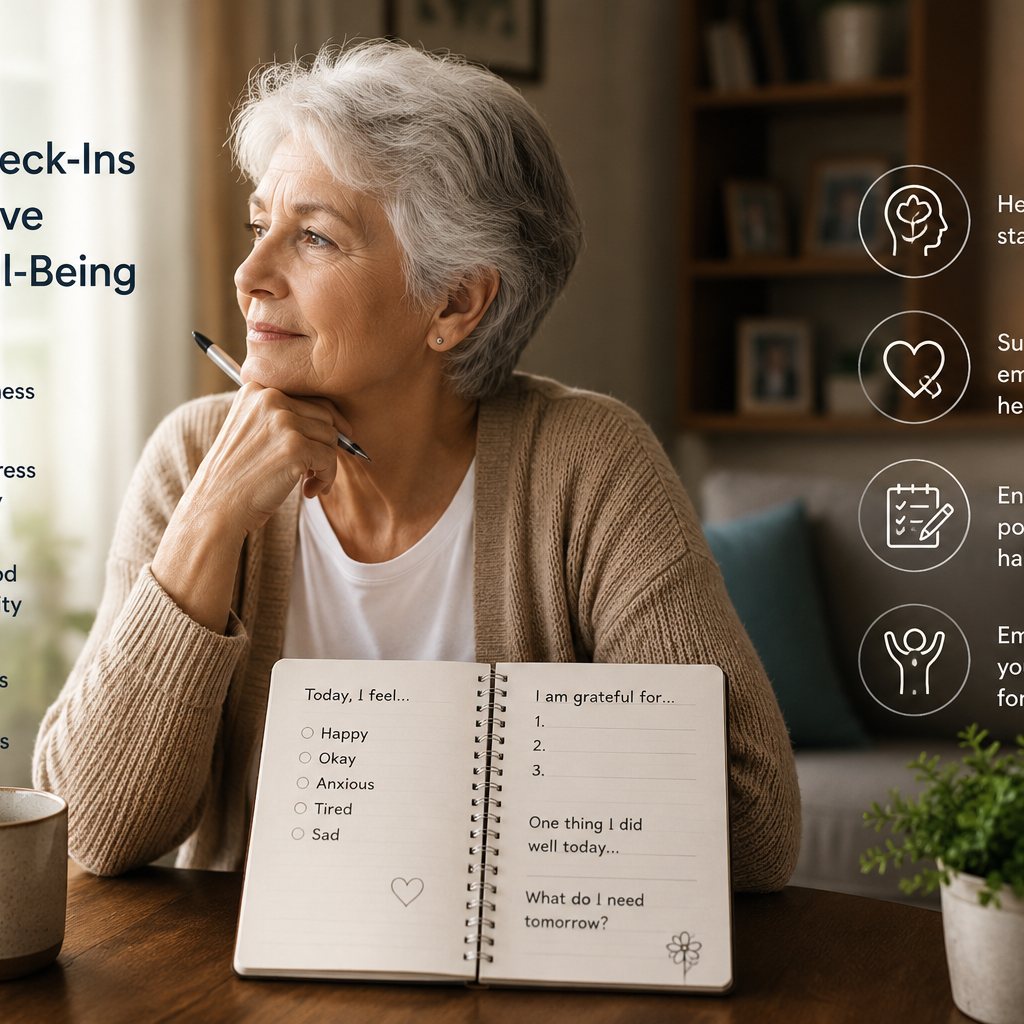
A mental check-in is a simple process that encourages individuals to reflect on their emotional state, mood, stress levels, and overall mental wellness. Although it may seem like a small habit, consistent self-awareness can provide meaningful insights into long-term well-being.
What Is a Daily Mental Check-In?
A mental check-in is the practice of taking a few moments each day to evaluate how you are feeling emotionally and mentally.
Questions may include:
- How am I feeling today?
- Have I been feeling more stressed than usual?
- Did I sleep well last night?
- Have I felt connected to others today?
- Am I experiencing any unusual worries or concerns?
- How would I rate my mood today?
The goal is not to diagnose a condition but to develop greater awareness of emotional patterns over time.
Why Mental Health Monitoring Matters for Seniors
Mental health challenges do not always appear suddenly. In many cases, changes develop gradually over weeks or months.
Older adults may experience:
- Increased loneliness
- Changes in mood
- Anxiety about health or finances
- Reduced motivation
- Difficulty sleeping
- Emotional stress related to caregiving responsibilities
- Adjustment challenges after retirement
Because these changes can be subtle, they are sometimes overlooked until they begin to significantly impact daily life.
Regular mental check-ins can help identify trends before they become more serious concerns.
The Benefits of Daily Mental Check-Ins
Many people are unaware of how their emotional state changes from day to day. A daily check-in encourages reflection and helps individuals better understand their thoughts and feelings.
Over time, patterns become easier to recognize, allowing for earlier action when needed.
One of the greatest advantages of regular monitoring is the ability to notice changes early.
For example, a senior who consistently reports lower mood levels for several weeks may benefit from additional support, social engagement, or professional guidance.
Early recognition often leads to better outcomes.
Over time, patterns become easier to recognize, allowing for earlier action when needed.
One of the greatest advantages of regular monitoring is the ability to notice changes early.
Tracking emotional well-being can help seniors communicate more effectively with family members, caregivers, and healthcare professionals.
Rather than relying on memory, individuals can discuss specific trends and experiences, leading to more informed conversations and support.
Early recognition often leads to better outcomes.
Over time, patterns become easier to recognize, allowing for earlier action when needed.
Taking a few moments each day to reflect can create a sense of control and mindfulness.
Many people find that acknowledging their emotions helps reduce stress and promotes emotional resilience.
Mental wellness plays an important role in maintaining independence, quality of life, and overall health.
Daily check-ins encourage ongoing engagement with emotional health, which is a key component of successful aging.
The Connection Between Mental and Physical Health
Mental and physical health are closely connected.
Emotional stress can influence:
- Sleep quality
- Blood pressure
- Energy levels
- Physical activity
- Immune system function
Likewise, physical health challenges can affect mood and emotional well-being.
By monitoring mental health regularly, seniors gain a more complete understanding of their overall wellness.
How Technology Is Making Mental Wellness More Accessible
Advances in digital health technology are creating new opportunities for seniors to engage with their mental well-being.
User-friendly applications, wellness platforms, and digital monitoring tools can help older adults:
- Track mood patterns
- Record daily wellness assessments
- Identify changes over time
- Share information with caregivers when appropriate
- Maintain greater awareness of emotional health
These technologies are designed to support self-awareness and encourage proactive wellness management.
Tips for Creating a Daily Mental Check-In Habit
Building a new habit does not have to be complicated.
Consider the following strategies:
Keep It Simple
A check-in can take less than two minutes each day.
Be Honest
The value of self-monitoring comes from accurate reflection rather than providing “perfect” answers.
Choose a Consistent Time
Many people find success by checking in during the morning or before bedtime.
Track Trends Rather Than Individual Days
Everyone experiences occasional good and bad days. Long-term patterns are often more meaningful than isolated responses.
Share Concerns When Necessary
If emotional difficulties persist, seeking support from family members, caregivers, or healthcare professionals is important.
Looking Toward the Future
As healthcare continues to evolve, prevention and early awareness are becoming increasingly important.
Daily mental check-ins represent a simple but powerful approach to supporting emotional wellness in older adults. By encouraging self-awareness and helping identify changes early, these practices can contribute to healthier, more fulfilling lives.
Mental well-being should not be viewed as something that is only addressed when problems arise. Instead, it should be monitored and supported just as routinely as physical health.
Small daily reflections can create meaningful long-term benefits, helping seniors stay engaged, informed, and connected to their overall well-being.